
Rule of Thumb: If It Ran Fine All Summer, It Needs a Quick Once-Over, Not an Overhaul
Most garage doors in this part of Florida don't need serious winter prep the way doors up north do — we're not dealing with snow load or ice-locked tracks. The exceptions are doors near the coast that pick up salt air, doors that already showed sluggishness or noise during hurricane season, and houses that'll sit empty while the family travels for the holidays. Those three situations deserve more than a glance.
Why Panhandle Winters Still Stress a Garage Door
Winter here means cold fronts that drop temperatures fast, gusty wind ahead of those fronts, and plenty of driving rain — not ice or heavy snow. That combination does a few specific things to a garage door system:
- Metal hardware contracts slightly in cold snaps, which can make already-worn rollers or hinges bind or squeak.
- Wind-driven rain finds gaps in weatherstripping that summer humidity never exposed.
- Homes near the coast keep accumulating salt-air corrosion on springs, tracks, and fasteners year-round — winter doesn't pause it.
- Shorter days mean the opener and photo-eye sensors get used more in low light, which makes existing alignment or wiring issues easier to notice.
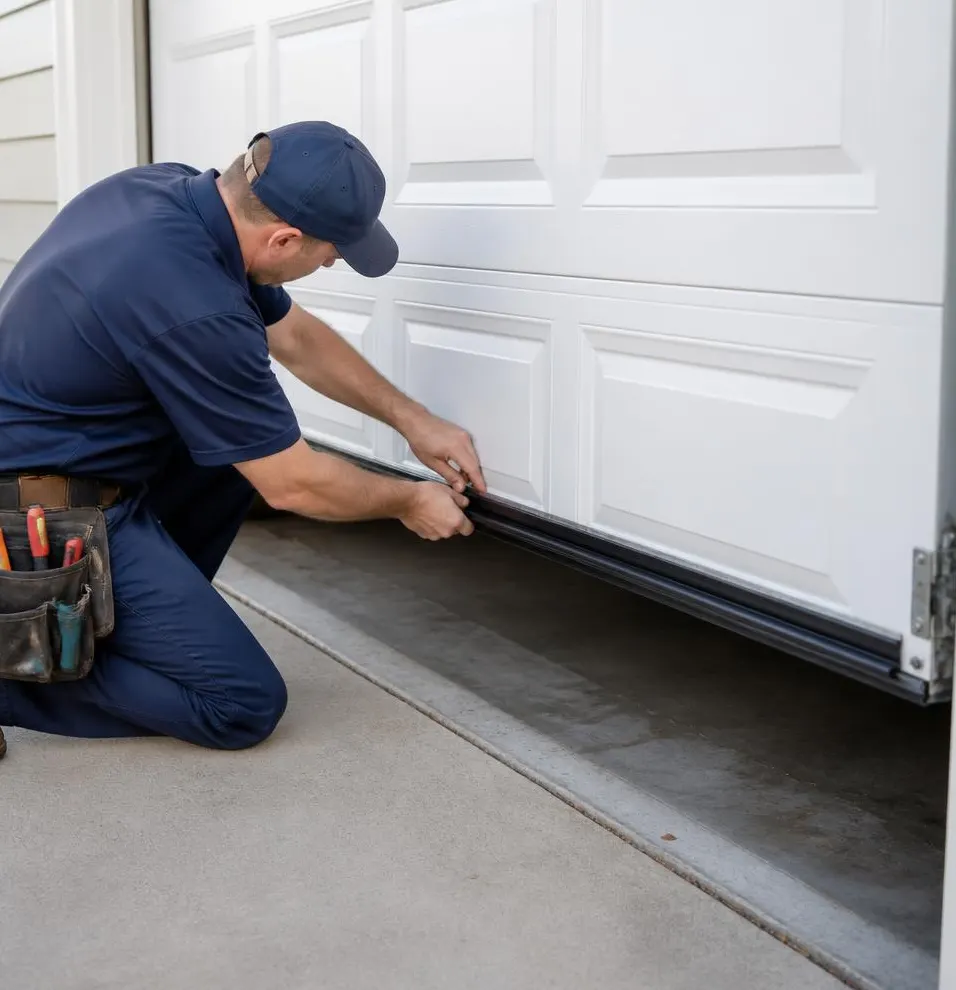
1. Check and Replace Weatherstripping
Pull up on the bottom seal from inside the garage. If it's cracked, flattened, or pulling away from the door, cold wind and rain will push right through it. Replacement seal kits typically run $20–$60 depending on door width, and swapping the bottom astragal is a job most homeowners can do with basic tools in under an hour. While you're at it, look at the vinyl stop molding around the sides and top of the frame — if daylight shows through the gaps, that same gap lets in wind-driven rain during a front.
2. Lubricate Before the Cold Snaps Hit
Hinges, rollers, and the torsion spring should get a light coat of garage-door-specific lubricant (not WD-40, which washes away and doesn't hold up) before temperatures start swinging. Cold mornings make stiff hardware stiffer, and a door that already dragged a little in October can start grinding or hesitating once a front comes through. Spray the lubricant directly on metal-to-metal contact points and wipe off excess so it doesn't attract dust.
3. Inspect Rollers and Cables for Coastal Wear
If you're within a few miles of the water — Hurlburt Field, Fort Walton Beach, Destin, and the other coastal stretches we serve all get some salt air — nylon rollers hold up noticeably better than steel ones over time. Look for rust streaks on the cables near the bottom brackets and check the roller stems for pitting. Cables that look frayed or rusted at the drum end are a safety issue, not a cosmetic one, since they carry serious tension.
4. Test the Opener's Backup Power and Sensors
Winter fronts can bring brief power blips even without a full storm system behind them. If your opener has a battery backup, test it now — most units let you unplug the opener briefly to confirm the battery kicks in. Also wipe down the photo-eye sensors near the floor on each side of the track; a film of pollen or dust is common this time of year and can cause the door to refuse to close, which people often mistake for a motor problem.
5. Plan for Holiday Travel
If you're leaving town for a week or two, don't rely on the wall button alone. Use the opener's vacation lock or disconnect feature, and manually lock the door from inside if you'll be gone more than a few days. An empty house with a garage door that's been acting up — slow to close, reversing for no reason, making noise on the way down — is not something you want to find out about from a neighbor while you're out of state.
What Can Wait Until Spring
You don't need to repaint steel doors, reseal brick-and-mortar garage walls, or replace hardware that's merely a little dusty. Full panel inspections for storm damage matter more in late spring before hurricane season ramps back up. Winter here is really about sealing gaps, keeping moving parts lubricated, and catching coastal rust before it reaches the cables or spring coils.
When to Call Hurlburt Field Garage Door Service
If your door is dragging, squeaking on cold mornings, or you've found rust on the cables or rollers during your check, that's the point to bring in a technician rather than keep lubricating around the problem. Our Garage Door Tune-Up & Maintenance service covers a full inspection of springs, cables, rollers, and weatherstripping, and we'll flag anything that's corrosion-related before it turns into a snapped cable or a stuck door. If the rollers or cables are already showing heavy wear, our Cable & Roller Replacement service gets those swapped out with coastal-grade hardware that holds up better against salt air.
If you're anywhere in Hurlburt Field, Fort Walton Beach, Mary Esther, Navarre, Destin, Niceville, Crestview, or Shalimar and want your garage door checked before the next cold front rolls through, give Hurlburt Field Garage Door Service a call — we'll get it sorted before the holidays, not after.