
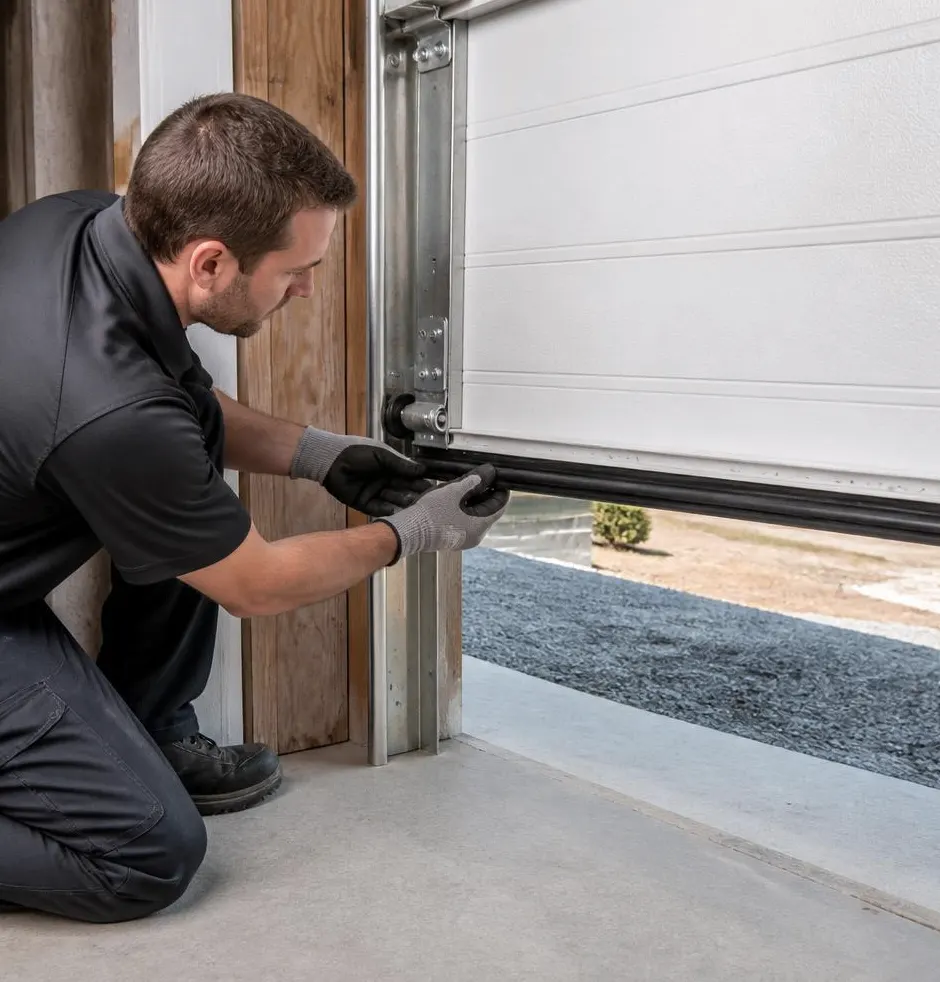
The Fight Starts in the Garage
It usually goes like this: one of you pulls into the garage after work, hits the opener, and the door groans halfway up and stops. Or it comes down crooked, scraping one side of the track. Now you're standing in the driveway with the engine still running, having the same conversation every renter eventually has: Is this our problem, or is this the landlord's problem?
It's not a dumb question. Garage doors are one of those systems that nobody thinks about until they fail, and rental agreements rarely spell out who covers what beyond "appliances" and "structural issues." Here's how to sort it out without it turning into a bigger argument than the door deserves.
The General Rule: Wear vs. Damage
Most leases — and most reasonable landlords — split responsibility along one line: normal wear and tear belongs to the landlord, damage caused by the tenant belongs to the tenant.
- Landlord's side: Springs that snap from age, cables that fray after years of use, an opener motor that finally dies, rollers that rust and seize up from humidity, panels that warp from heat and moisture cycling. These are systems that came with the house and were expected to last a certain number of cycles or years. When they wear out on their own schedule, that's maintenance, not misuse.
- Tenant's side: A door knocked off its track because a car bumped it, a panel dented by a bike or a lawnmower, a remote that got run over, a sensor that stopped working because someone spray-painted over it or packed boxes in front of it. If something happened because of how the door was used, that's usually on the renter.
The gray area is where most disputes live. A door that's been slammed shut for two years by a frustrated teenager will fail faster than one used gently — but proving "slammed" versus "old" after the fact is nearly impossible. This is exactly why the next step matters so much.
What to Inspect (and Document) at Move-In
Before you sign anything or move a single box in, walk the garage with your phone out. Five minutes now saves a month of arguing later — with your landlord or with each other.
- Open and close the door manually. Disconnect the opener (there's usually a red pull cord) and lift the door by hand. It should move smoothly and stay wherever you leave it, roughly balanced. If it's heavy, uneven, or slams down, that's a spring issue worth flagging before you're the one who gets blamed for it.
- Check the tracks for rust. In this part of Florida, salt air and constant humidity eat through hardware faster than it does inland. Light surface rust on rollers or hinges is normal; flaking, pitted rust on the tracks themselves is a sign of deferred maintenance that existed before you moved in — get a photo.
- Test the opener's auto-reverse safety feature. Close the door and place a 2x4 flat on the ground where it would land. The door should reverse the moment it touches the wood. If it doesn't, that's a safety issue for the landlord to address, not something to live with.
- Look at the panels in daylight. Dents, cracks, or bowing (common after a storm with wind-driven debris) should be noted and photographed with a timestamp. This protects you from being charged for damage you didn't cause.
- Check the weatherstripping at the bottom. Afternoon downpours are routine here for several months of the year, and a gap at the bottom seal means water finding its way in every time it rains. If it's cracked or missing, ask for it to be replaced before move-in.
- Ask about hurricane prep. If the door has a wind-load rating or reinforcement bracing, find out who's responsible for closing it up or bracing it before a storm, and whether that's covered in the lease. This is worth a direct conversation, not an assumption.
Put it all in writing — an email to the landlord with photos attached is enough. You don't need a lawyer for this, just a timestamp.
During the Lease: Keep It Simple
Once you're living there, the same wear-vs-damage line applies. Routine noises, slow operation, or an opener that's acting up after a few years isn't something to patch yourself — tell the landlord in writing and let them schedule a repair. If you caused the problem (backed into it, overloaded a shelf against the track, disconnected the opener and never reconnected it correctly), it's fair to expect you'll cover that one.
One habit that helps everyone: don't ignore small symptoms hoping they'll resolve themselves. A door that's slightly off-balance or a little noisy almost never gets better on its own, especially with the heat and moisture swings typical of this area. Left alone, it becomes a bigger, more expensive job — and a bigger argument about whose fault it became.
When to Call In a Professional
If you're a tenant and the landlord has agreed to a repair, or if you're the homeowner sorting this out before renting the place, Hurlburt Field Garage Door Service can settle the technical side fast. A technician can diagnose whether a problem is age-related wear or impact damage, which clears up the money conversation before it starts. Common calls in rental situations include Garage Door Tune-Up & Maintenance to catch rust and worn rollers before they fail, and Garage Door Spring Repair when a door has gone heavy or uneven — a repair that shouldn't be handled DIY given how much tension is stored in those springs.
If your garage door is causing more disagreement than it's worth, call Hurlburt Field Garage Door Service. We serve Hurlburt Field, Fort Walton Beach, Mary Esther, Navarre, Destin, Niceville, Crestview, and Shalimar, and we'll tell you straight whether you're looking at wear and tear or something else — no guesswork, no upsell.