
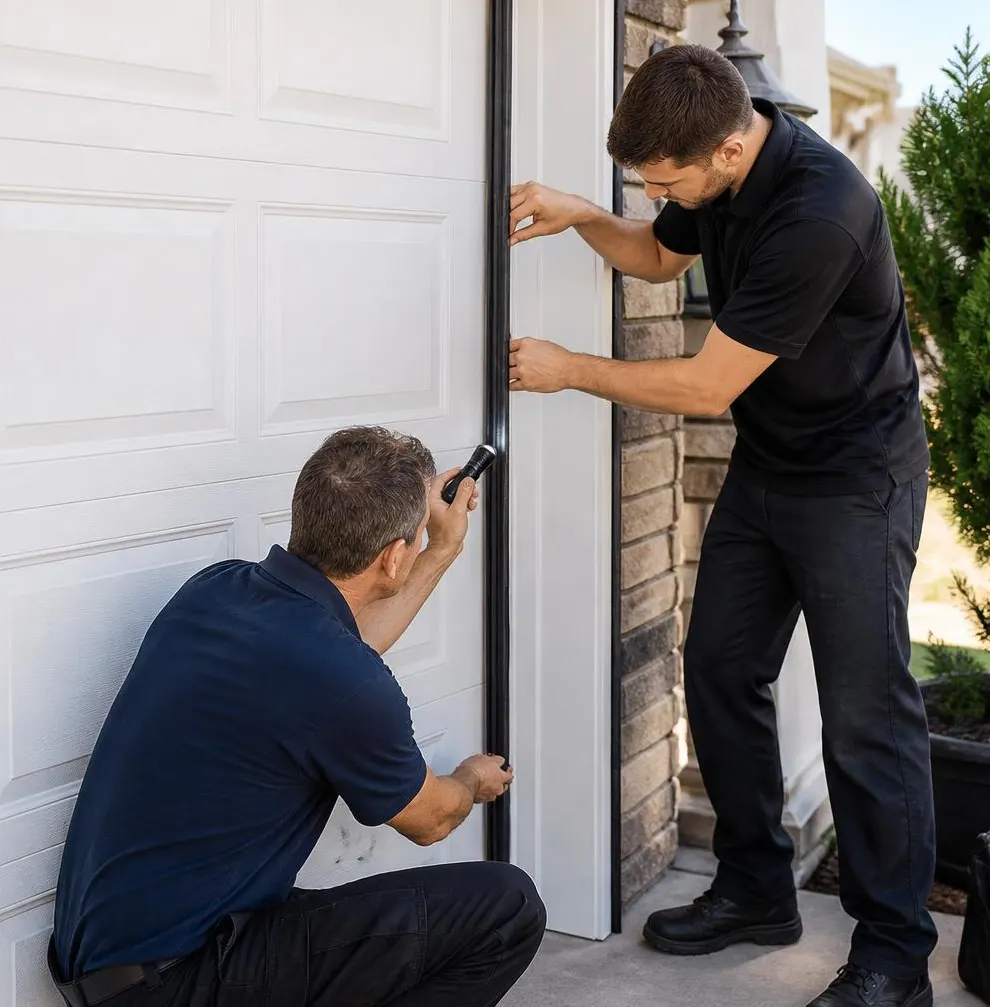
You hit the opener button on your way to work and the door groans, jerks, then stalls halfway up. Or maybe the bottom seal looks like it's glued to the concrete, and the door won't lift until you give it a good tug. It's not something you see often here, but after one of those rare cold, damp nights in the Panhandle, it happens more than people expect — and it's worth understanding why before you force anything.
What You'll Notice First
- The door hesitates or shudders before it starts moving
- A grinding or squealing noise comes from the tracks or rollers
- The opener motor strains, then reverses the door back down
- The bottom weatherseal seems stuck flat against the slab
- The door feels heavier than usual, even for a manual lift
- Movement is jerky instead of smooth, especially in the first foot of travel
None of these symptoms mean the door is broken for good. They're usually pointing to one or two specific trouble spots, and a technician checks them in a predictable order — starting with the cheapest, most obvious fix and working toward the mechanical stuff.
Cause #1: The Bottom Seal Is Stuck to the Slab
This is the first thing worth ruling out, and it's the easiest to fix yourself. On a cool, humid night, condensation forms on the concrete and on the rubber weatherstrip along the bottom of the door. If the slab isn't sealed or has any pitting, that moisture can create enough suction to hold the seal down, especially if the rubber has gotten a little soft or gummy from age and salt-air exposure.
The fix: Gently pry the seal free with a putty knife rather than forcing the opener to rip it loose — that strain is what burns out opener gears early. If this happens repeatedly, the weatherstrip itself may be due for replacement, since UV and humidity break it down faster near the coast than it would wear inland.
Cause #2: Old or Thickened Lubricant in the Tracks and Rollers
Next, a technician looks at what's coating the rollers, hinges, and track. Grease and lubricant that's been sitting since spring or summer can thicken and gum up once temperatures drop, especially if it's mixed with the fine grit and salt residue that builds up on coastal homes. That gummy buildup adds drag right where the door needs to glide smoothest.
The fix: Clean the tracks and rollers with a dry cloth, then apply a silicone-based garage door lubricant — not household oil, which attracts more dust and breaks down faster in humidity. This is standard work in a garage door tune-up, and it's one of the most effective fixes for a sluggish door because it addresses friction at every moving point at once.
Cause #3: Rust on Rollers, Hinges, or Track Edges
If lubrication alone doesn't solve it, the next stop is rust. Salt air near the coast speeds up corrosion on exposed metal, and a cold, damp stretch can accelerate it further. Rust creates tiny high spots on rollers and hinge pins that catch instead of rolling smoothly, which shows up as grinding noise or a door that moves in short, jerky stages.
The fix: Light surface rust can sometimes be cleaned and re-lubricated. Rollers or hinges with pitting or flaking rust need to be swapped out — this falls under cable and roller replacement, and it's worth doing before the rust spreads to the track itself, which is a bigger repair.
Cause #4: Spring Tension Shifting with Temperature
Torsion and extension springs are steel, and steel contracts slightly as it cools. On a door that was already running close to its correct spring tension, a cold snap can be just enough to throw the balance off, making the opener work harder to lift the same door it handled fine the week before. This usually shows up as the opener straining or reversing partway through the cycle.
The fix: This is not a DIY adjustment — torsion springs are under serious tension and adjusting them incorrectly can cause injury. A technician checks the door's balance by disconnecting the opener and testing how the door holds position manually, then adjusts spring tension if needed.
Cause #5: Opener Force Settings and Chain or Belt Tension
If the springs check out fine, the opener itself gets checked next. Chain and belt drives can tighten or loosen slightly as temperatures swing, and most openers have a force setting that determines how hard the motor pushes before it assumes something's blocking the door and reverses. A setting that was fine in summer heat can be slightly miscalibrated once cooler, denser air changes how the motor's load feels.
The fix: Adjusting chain tension and recalibrating force settings is quick work for a technician, and it's usually checked during any opener-related service call anyway.
Cause #6: Panel or Frame Swelling from Humidity
Last on the list, because it's the least common but the hardest to miss once you spot it: humidity swelling. Wood-composite panels and wooden door frames can absorb moisture during humid stretches and swell just enough to bind against the tracks or the frame. This tends to show up as resistance at the same spot every time the door moves, rather than random grinding.
The fix: If swelling is confirmed, the fix is usually track realignment, and in some cases panel replacement if the swelling has caused warping that won't reverse once things dry out.
When to Call Hurlburt Field Garage Door Service
If you've freed the seal, wiped down the tracks, and the door is still sluggish, grinding, or reversing on its own, it's time to call rather than keep testing the opener's patience. We'll run through spring balance, check for rust on rollers and hinges, and inspect the track alignment — most of this is covered under a standard garage door tune-up and maintenance visit, and if rollers or cables are the culprit, we handle cable and roller replacement on the spot in most cases.
If your Hurlburt Field, FL home has a door that's been acting up with every temperature swing this season, give us a call. We'll find the actual cause, fix it properly, and get your door running smooth again before the next cold morning catches you off guard.